P1racenews AI automatic summary:
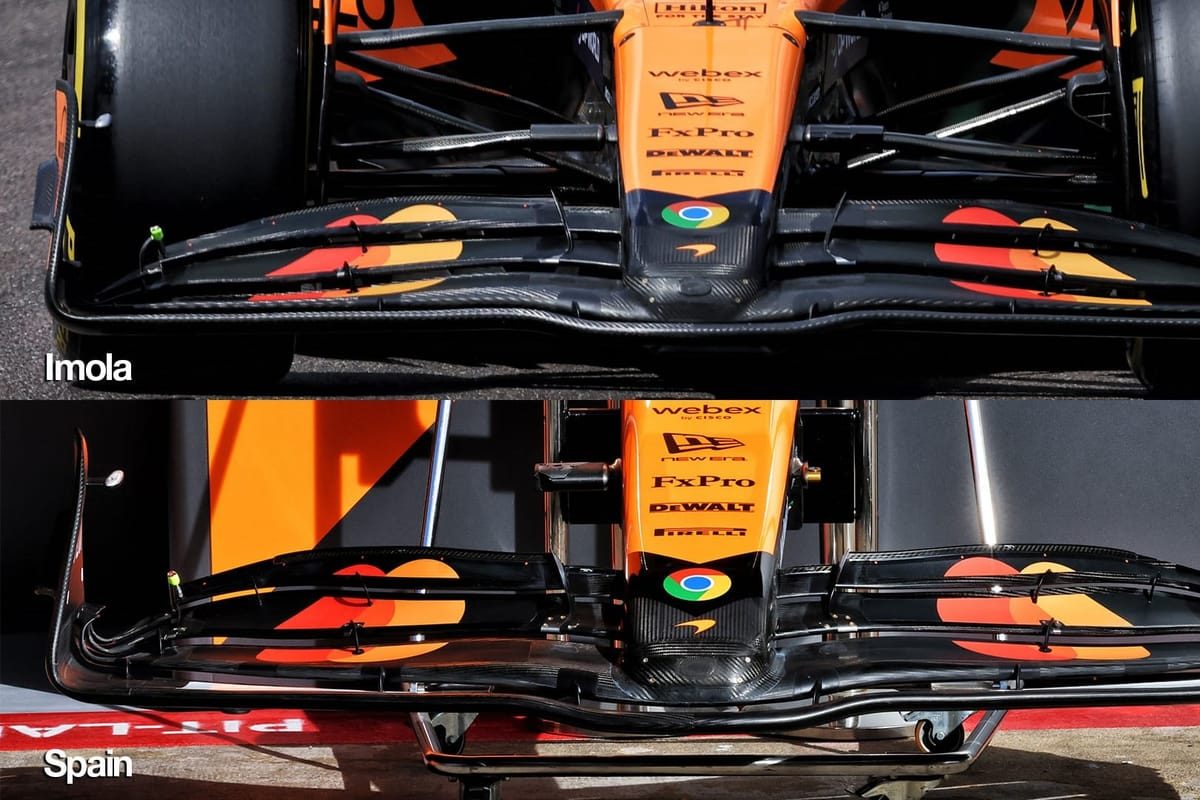
The first images of McLaren’s revised front wing aimed at passing tougher F1 flexibility tests highlight how the devil will be in the detail of what teams have had to change
The new front wing changes in McLaren’s design aimed at passing Formula 1’s stricter flexi-wing tests focus on detailed modifications that teams have to implement. This weekend’s Spanish Grand Prix introduces tougher FIA tests to prevent teams from exploiting aeroelasticity excessively. The new tests reduce allowed movement under force from 15mm to 10mm on both sides and from 20mm to 15mm on one side. Additionally, the front wing flap now has a deflection limit of 3mm when a 60N load is applied, down from 5mm. While the changes may not drastically alter the appearance of the wings, teams are mainly adjusting accessory components rather than redesigning the wing flaps. Moreover, many changes are internal to strengthen the carbonfibre structure and reduce flexing at high speeds, as demonstrated by McLaren’s updated design for Spain. The impact of these front wing modifications on the pecking order and performance remains uncertain, with some teams expecting minimal effects while others anticipate a significant reshuffling. The adjustments pose challenges in balancing low-speed understeer and high-speed oversteer, inherent characteristics of current ground effect F1 cars, showcasing the complexity of adapting to the new regulations.