P1racenews AI automatic summary:
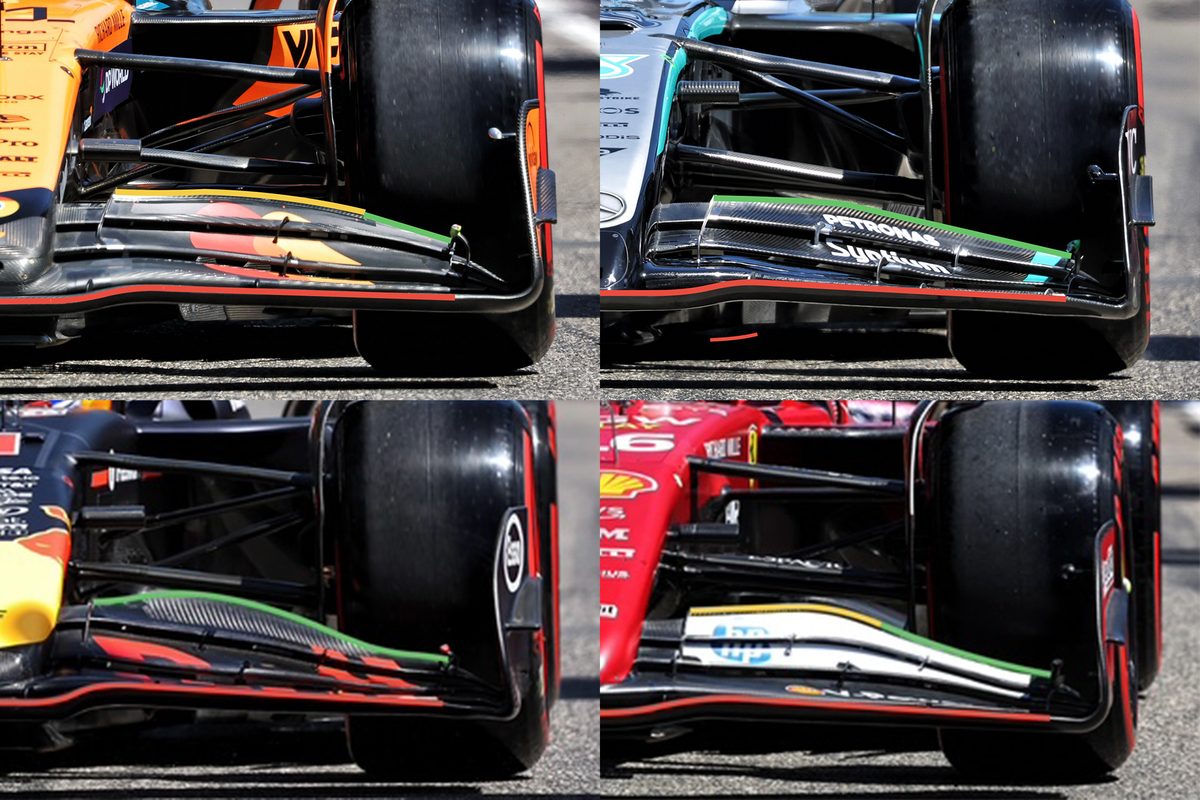
Whether it’s hope or expectation, plenty expect F1’s incoming stricter front wing flexibility tests to hurt McLaren. Gary Anderson’s seen no need for any major design changes there – instead, it might be Red Bull and Ferrari who are affected most
Several Formula 1 teams will arrive in Barcelona for the Spanish Grand Prix with uncertain prospects due to the recent reduction in front wing flexibility testing by the FIA, impacting teams differently.
Front wing flexibility is crucial for generating front grip at lower speeds and a more stable ride in faster corners, highlighting the delicate balance between understeer and stability.
Teams must carefully adjust front wing angles to navigate the trade-off between understeer at low speeds and stability at high speeds, ultimately affecting lap times and potentially leading to crashes.
The weight and aerodynamics of current cars further complicate this delicate balance, exacerbated by the ground effects that increase downforce near the track, affecting front-end grip.
Each team’s front wing design is crucial in determining aerodynamic balance between low and high speeds, and the impact of the FIA’s clampdown will vary among teams based on their setups and adaptations.
Understanding the front wing flex testing process, particularly the linkage between wing sections and load distribution, is key to maintaining performance and stability on the track, essential for success in high-speed races like the Spanish Grand Prix.