P1racenews AI automatic summary:
Mexico City’s high altitude means F1 teams have always faced a challenge coming to the Mexican GP. Gary Anderson looks at how McLaren, Red Bull, Mercedes and Ferrari have set up to cope with those demands in 2025
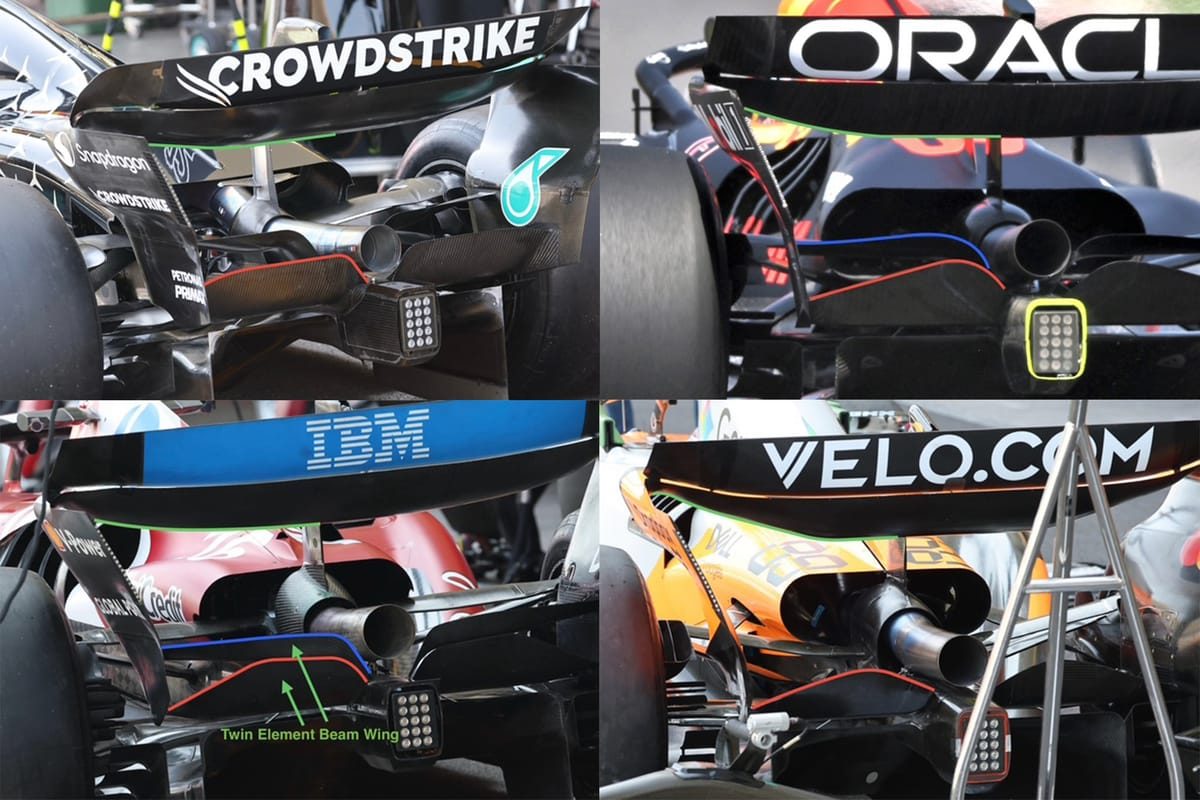
The Mexican Grand Prix in Formula 1 presents unique setup challenges due to Mexico City’s high altitude of 2240m above sea level, resulting in reduced air density by about 25%. This affects the performance of cars differently, making it an ideal opportunity to analyze rear wing designs of McLaren, Red Bull, Ferrari, and Mercedes.
Among the top four teams, Mercedes leads in maximum downforce followed by Red Bull, Ferrari, and then McLaren. Mercedes utilizes a beam wing design that optimally interacts with the diffuser, while Red Bull and Ferrari opt for twin-element beam wings, each with unique characteristics to enhance downforce efficiency.
McLaren, as the Constructors’ champion, features a rear wing with the lowest downforce level, with a design that differs from the others, focusing on maintaining a balance between downforce and drag. The setup challenge in Mexico City is complicated by the need to adjust for reduced air density, affecting ride height and aerodynamic performance across the teams’ cars. Ultimately, the weekend will reveal which teams strike the best compromise between downforce, drag, and speed on the unique track.